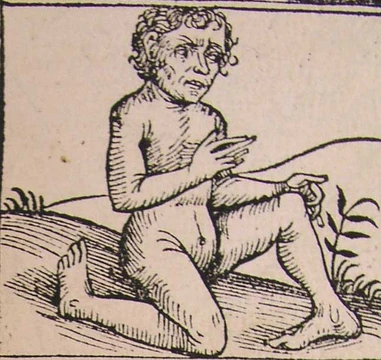
Churel
A demonical revenant of an unpurified woman, often seeking revenge.

Wikipedia / Wikimedia Commons
The Churel, also spelled Chudail, Churail, Chudel, Churreyl, or Churrail, and known as Petni and Shakchunni, is a mythical or legendary creature resembling a woman, often described as a demonical revenant. It is said to occur in South Asia, Southeast Asia, and the Caribbean, particularly popular in India, Bangladesh, Nepal, Pakistan, Trinidad and Tobago, Guyana, and Suriname. The churel is typically described as 'the ghost of an unpurified living thing' and is also called a tree-spirit because she is often said to latch on to trees. According to some legends, a woman who dies very cruelly will come back as a revenant churel for revenge, especially targeting the males in her family.
- Also known as
- Chudail, Churail, Chudel, Churreyl, Churrail, Petni, Shakchunni, Pichal Peri, Pontianak
- Type
- Mythical or legendary creature, demonical revenant
- Region
- South Asia, Southeast Asia, Caribbean
- Popular in
- India, Bangladesh, Nepal, Pakistan, Trinidad and Tobago, Guyana, Suriname
- Associated with
- Unnatural death, childbirth, menstruation, unfulfilled desires
- Known for
- Shape-shifting, seducing men, backward feet
Lore & Background
The legend of the Churel supposedly originated from Persia, where they were described as spirits of women who died with 'grossly unsatisfied desires'. In South-East Asia, the Churel is the ghost of a woman who died during childbirth, while pregnant, or during the prescribed 'period of impurity'. In India, if a woman dies an unnatural death or during childbirth, especially during Diwali, she will become a Churel. The Korwas of Mirzapur say that if a woman dies in a lying room (where women give birth) she becomes a Churel. The Pataris and Majhwars say that if a girl dies during pregnancy or when she is unclean she becomes a Churel. The Bhuiya say that if a girl dies before she is twenty days old, she becomes a Churel. In Punjab, some believe that if a woman dies on a bed and no proper donation of bed-related items is done, she becomes a Churel. In western India, especially Gujarat, any woman who dies an unnatural death is believed to turn into a Churel. Originally, it was believed that only a low-caste woman turns to a churel. In West Bengal and Bangladesh, Petni/Shakchunni are formed when a woman dies unmarried or with unfulfilled desires.
Reader's Guide
The Churel remains a significant figure in South Asian and Caribbean folklore, reflecting cultural anxieties about female death, impurity, and unfulfilled desires. Her legend has persisted in modern literature, cinema, television, and radio, with many references to her activities. Reports of sightings still occur in rural regions of South-East Asia. The churel is often colloquially or mistakenly used for a witch in India and Pakistan. Her story serves as a cautionary tale about the treatment of women, particularly pregnant women, and the importance of proper funeral rites. Folk remedies and rituals to prevent her creation or appease her are still practiced in some communities, such as anointing the corpse with cow products, reciting special texts, or sowing mustard on the burial path. The churel also has associations with the Mother Goddess and the Rakshasi, and within Hindu belief, may turn into dakinis serving the goddess Kali.
Did You Know?
- The churel is known as the Pichal Peri in the Punjab region of India and Pakistan, and Pontianak in Malaysia and Indonesia.
- The true form of a churel is described as extremely ugly with saggy breasts, a black tongue, and backward feet.
- In some legends, a churel will hold a young man captive until he is elderly, or uses him sexually until he withers and dies.
- The word 'churel' is often used colloquially or mistakenly for a witch in India and Pakistan.
Frequently Asked Questions
Who is Churel?
Churel is a vengeful female revenant from South Asian and Caribbean folklore, typically described as the restless spirit of a woman who met a violent or unnatural end. She is one of the most widely recognized back-footed beings in the region's mythological traditions, known by many alternate names including Chudail, Petni, and Pontianak.
What are Churel's powers and abilities?
She is renowned for her capacity to shift between human and non-human forms, her skill at luring and seducing men, and her distinctive backward-facing feet. She is also strongly tied to trees, often clinging to them as a perch from which she ambushes her victims.
How does Churel's story end?
In most tellings, Churel does not receive a peaceful resolution; she remains an eternal, restless force of vengeance bound to the circumstances of her violent death. Her existence functions as a perpetual curse rather than a narrative with a fixed conclusion.
Why is Churel important in folklore?
She serves as a cautionary figure across India, Bangladesh, Nepal, Pakistan, and the Caribbean nations of Trinidad and Tobago, Guyana, and Suriname. Her stories encode deep cultural anxieties around childbirth, menstruation, unfulfilled desires, and the consequences of dying without proper spiritual purification.
What causes a woman to become a Churel?
According to the legends, a woman who dies a particularly cruel or unnatural death—especially one connected to childbirth or violence—risks becoming a Churel if her spirit is never properly purified. Her unfulfilled earthly desires and unresolved suffering fuel her transformation into a demonical revenant.
More in Back-footed beings 1-23
Spotted an error? Know more?
This is a living reference — every entry is fact-audited, and reader corrections feed straight into our audit queue. Suggest an edit · See this site's audit record