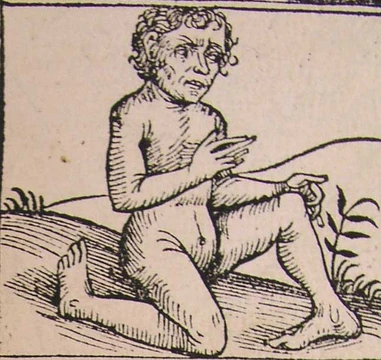
Jumbee
A dark, shadowy spirit of evil in Caribbean folklore.

Wikipedia / Wikimedia Commons
In parts of the Caribbean, a jumbee (also spelled jumbie, and called a mendo or chongo in Colombia and Venezuela) is a type of mythological spirit or demon. The word can serve as a catch-all term for any evil entity. There are many different kinds of jumbees, reflecting the region’s layered history and mix of African, Amerindian, East Indian, Dutch, English, and even Chinese traditions. While ideas about jumbees vary from culture to culture, a common thread is that wicked people are fated to become agents of evil after death. Unlike the wispy, fog-like ghosts of other folklore, a jumbee is usually described as a dark, shadowy figure.
Belief in jumbees is widespread across English-speaking Caribbean islands that were once British colonies, and it is also held by practitioners of Obeah—a mystical tradition blending African beliefs with Western European, mainly Anglican, ideas about the dead. Guyana and many islands, from Antigua and Barbuda in the east to the Bahamas in the north and as far south as Trinidad, have long included the jumbee in their folklore. In the French islands of Guadeloupe and Martinique, people use the term “zombi” instead of “jumbie” for ghosts, revenants, and other supernatural beings. The Étang Zombi in Guadeloupe is named after a legend about a slave owner’s wife who was killed by her husband for trying to free his slaves and now haunts the pond. In the Congo, the word “nfumbi” refers to an ancestral ghost and may be related to “jumbie.”
In the British Virgin Islands and the U.S. Virgin Islands, a Mocko Jumbie is a cultural stilt-dancer seen in Caribbean Carnival parades. The name combines “jumbie” (a spiritual entity) with “Moko” (a tall, watchful deity who guards, heals, and delivers retribution). In the Bahamas, a 1918 transcription by Elsie Worthington Clews Parsons of an old story notes that in Jamaica the jumbee is often called a “sprit,” with the line: “Dese sprits which you call witch people, dey lives in de air.” In Jamaica and Barbados, the old Akan word “duppy” is used instead of the Kikongo-rooted “jumbee.”
In Montserrat’s folk religion, a jumbie is a ghost or spirit of the dead. During ceremonies called jumbie dances, accompanied by jumbie drums, jumbies are said to possess people. In the dance, four couples perform a set of five progressively quicker quadrilles, switching out with other couples until someone is possess
- field
- Caribbean folklore
- known_for
- Malevolent spirit or demon in Caribbean mythology
- nationality
- Various Caribbean cultures
Lore & Background
In English-speaking Caribbean states colonized by the British, belief in the jumbee is common, including among practitioners of Obeah, a form of mystical wizardry that encompasses traditional African beliefs and Western European, primarily Anglican, images and beliefs concerning the dead. Guyana and various islands—including Antigua and Barbuda, The Bahamas, and Trinidad—have long held a tradition of folklore that includes the jumbee. In the French islands Guadeloupe and Martinique, people speak of 'zombi' rather than 'jumbie' to describe ghosts, revenants, and other supernatural creatures. The Étang Zombi in Guadeloupe owes its name to the legend of the wife of a slave owner who was killed by her husband for trying to free his slaves and now haunts the pond. The people of the Congo speak of a nfumbi—ancestral ghost—which could be related to the word 'jumbie.'
Reader's Guide
In Montserrat, a jumbie is a ghost or spirit of the dead, said to possess people during ceremonies called jumbie dances, accompanied by jumbie drums. Jumbies receive numerous small offerings, such as a few drops of rum or food, and are believed to have the ability to shape-shift, usually taking the form of a dog, pig, or cat. There are many recommended ways to avoid or escape jumbie encounters: leaving a pair of shoes outside a door will distract them, as they have either no feet or backwards feet; a heap of sand, salt, or rice outside a door compels them to count every grain before sunrise; a rope with many knots keeps them busy trying to undo them; walking backwards may prevent a jumbee from following one inside; and crossing a river may stop them, as they cannot follow over water. The jumbee's significance lies in its deep roots in Caribbean history and ethnic diversity, serving as a unifying figure of malevolent supernatural belief across many islands and cultures.
Did You Know?
- A Mocko Jumbie is a cultural stilt-dancer from the British Virgin Islands and United States Virgin Islands, often seen in Caribbean Carnival parades.
- In Jamaica and Barbados, the old Akan word 'duppy' is used rather than the Kikongo-rooted word 'jumbee.'
- Jumbies are believed to have the ability to shape-shift, usually taking the form of a dog, pig, or cat.
- In Montserrat, jumbies are said to possess people during ceremonies called jumbie dances, accompanied by jumbie drums.
Frequently Asked Questions
Who is Jumbee in Caribbean folklore?
Jumbee is a malevolent, dark, and shadowy spirit or demon found across various Caribbean cultures. It functions as a broad catch-all term for any kind of evil entity rather than one single fixed character.
What is Jumbee's role or nature in the stories?
A common thread in jumbee lore is that wicked individuals are fated to become agents of evil after they die, serving as a posthumous punishment for their cruelty. The spirit embodies pure malice rather than the neutral wandering of a typical ghost.
How is Jumbee different from ordinary ghosts in other folklore?
Where many traditions picture ghosts as wispy, fog-like presences, a jumbee is specifically described as a dark, shadowy form of evil. This gives it a heavier, more menacing physical presence in the stories it appears in.
What other names does Jumbee go by?
The spirit is also spelled jumbie, and in Colombia and Venezuela it is known as a mendo or chongo. These regional variations reflect how the concept traveled and adapted across different parts of the Caribbean and northern South America.
Why does Jumbee appear in so many different cultural forms?
The Caribbean's layered history blends African, Amerindian, East Indian, Dutch, English, and even Chinese traditions, and jumbee absorbed elements from each. As a result, there are many distinct kinds of jumbee, each shaped by the specific cultural mix of the island or community that tells the story.
More in Back-footed beings 1-23
Spotted an error? Know more?
This is a living reference — every entry is fact-audited, and reader corrections feed straight into our audit queue. Suggest an edit · See this site's audit record