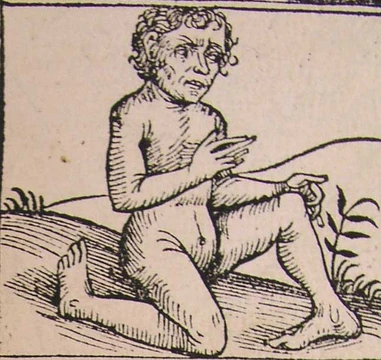
Sihuanaba
A shapeshifting spirit luring victims with beauty before revealing horror.

Wikipedia / Wikimedia Commons
The Sihuanaba is a shapeshifting spirit from Central American folklore, with similar versions found in parts of Mexico. It typically appears from a distance as an attractive woman with long hair, using this disguise to lure solitary men into remote or dangerous places. Once the victim is close, the entity reveals its true, horrifying form—often a skull without flesh or a horse's head. Scholars believe the legend originated in Spain and was brought to Latin America during the colonial period, where it was later used by Spanish colonists as a tool for social control over Indigenous and mestizo communities.
In traditional stories, the Sihuanaba looks like a strikingly beautiful woman, sometimes nude or dressed in thin white or black clothing. She is often seen washing clothes or bathing in rivers and streams. She targets people traveling alone at night, keeping her face hidden to exploit her allure, then leads them off established paths into rough terrain, leaving them lost or confused. In Guatemalan accounts, she is a seductive figure with long hair who hides her features; when she reveals her face, it resembles a horse or a human skull. This sudden sight is said to cause such shock that victims die of fright or go insane. Many versions say she specifically preys on unfaithful men by taking the form of a lover or desirable woman. She also targets children by appearing as their mother or another trusted female, luring them away, touching them (which induces madness), and abandoning them in the wilderness, deeply traumatized.
For protection, Central American folklore offers several practices rooted in faith and local custom. In border areas of Guatemala and El Salvador, oral tradition says that someone who encounters the Sihuanaba can break her influence by making the sign of the cross or biting the blade of a machete. These actions are believed to sever the spirit's hold, ending the panic and disorientation, and driving the entity away.
The name "sihuanaba" comes from Mesoamerican indigenous languages, though its exact origin is debated. In parts of Mexico, the entity is called *maciuatli*, a Nahuatl compound from *cihuatl* ("woman") and *matlatl* ("net"), meaning "net-woman"—a being who ensnares men in a web of attraction. In Honduras, Nicaragua, and Costa Rica, the regional names *cigua* or *cegua* come directly from the Nahuatl word *cihuatl* ("woman"). G
- Origin
- Central American folklore, with variants in Mexico
- Type
- Shapeshifting spirit
- Common Names
- Sihuanaba, Siguanaba, Macihuatli, Cegua
- Targets
- Solitary men, unfaithful men, children
- True Form
- Fleshless skull or horse's head
- Protection
- Sign of the cross or biting a machete blade
Lore & Background
In traditional folklore, the Sihuanaba is described as a woman of striking beauty, often depicted nude or wearing thin white or black garments. She is commonly encountered washing clothing or bathing in rivers, streams, and other bodies of water. The entity primarily targets solitary nocturnal travelers, keeping her face initially obscured to exploit her physical appeal. Through this deception, she draws victims away from established routes into remote or hazardous terrain, leaving them lost or disoriented. In Guatemalan mythology, the Sihuanaba is typically depicted as an attractive, seductive woman with long hair who conceals her facial features. Upon revealing her face, it is shown to resemble that of a horse or human skull. This sudden revelation is said to induce severe shock, causing victims to either die of fright or descend into madness. In many accounts, the entity specifically targets unfaithful men by assuming the appearance of a lover or another desirable figure to lead them astray. The Sihuanaba also targets children by assuming the appearance of their mother or another trusted female figure. After luring the child to a remote location, the entity makes physical contact, which is said to induce madness. She subsequently abandons the child in the wilderness, leaving them lost and severely traumatized.
Reader's Guide
The Sihuanaba holds significance as a cautionary figure in Central American and Mexican folklore, embodying themes of deception, punishment, and social control. Scholars hypothesize that the legend originated in Spain and was introduced to Latin America during the colonial period, where it was adapted to regulate the behavior of Indigenous and mestizo populations, particularly targeting unfaithful men and those who stray from societal norms. The entity's ability to shapeshift into a beautiful woman or a trusted figure underscores its role as a moral warning against lust, infidelity, and disobedience. Regional variations, such as the Salvadoran origin story of Sihuehuet and the Guatemalan tales of the horse-faced woman, enrich the myth's cultural depth. The Sihuanaba's persistence in oral tradition reflects its adaptability, serving both as a supernatural threat and a tool for reinforcing community values. Its legacy endures in modern storytelling, where it continues to symbolize the dangers of deception and the consequences of moral transgressions.
Did You Know?
- The term Sihuanaba may derive from Nahuatl words meaning 'net-woman' or 'concubine', though some scholars link it to the Kʼicheʼ Maya word for 'cliff'.
- In Salvadoran folklore, the Sihuanaba was originally a woman named Sihuehuet who was cursed by the god Teotl for attempting to poison her husband.
- In Guatemala, the Sihuanaba is said to appear to unfaithful men and can take the form of the victim's lover or wife.
- Protection against the Sihuanaba includes making the sign of the cross or biting the blade of a machete.
More in Back-footed beings 1-23
Spotted an error? Know more?
This is a living reference — every entry is fact-audited, and reader corrections feed straight into our audit queue. Suggest an edit · See this site's audit record