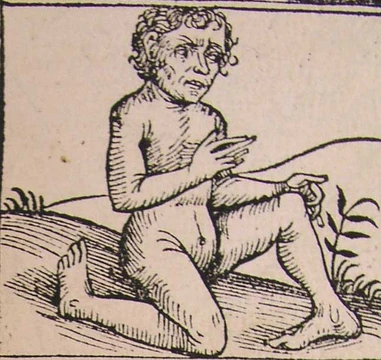
Xolotl
Aztec god of fire, lightning, twins, and psychopomp for the dead.

Wikipedia / Wikimedia Commons
Xolotl, the canine twin of Quetzalcōātl, is a complex Aztec deity whose domains span fire, lightning, twins, monsters, death, misfortune, sickness, and deformities. Born to the virgin Chīmalmā, Xolotl embodies the dark aspect of Venus as the Evening Star and is tied to heavenly fire. He is most often shown as a man with a dog’s head and acts as a psychopomp, shepherding souls through the underworld.
In myth, Xolotl is the sinister god of monstrosities, wearing Quetzalcōātl’s twisted wind jewel. His role was to shield the sun from underworld dangers. As Quetzalcōātl’s double, he accompanied him to Mictlān to retrieve bones from a previous world, Nāhuiātl, to create life for the present age, Nahui Ollin. This act is reenacted nightly when Xolotl guides the sun through the underworld. In the tonalpohualli, he rules over day Olin (movement) and the trecena 1-Cozcacuauhtli (vulture).
His empty eye sockets come from the legend of Teotihuacan: when the gods sacrificed themselves for the new sun, Xolotl fled, weeping so hard his eyes fell out. In another creation story from the Florentine Codex, after the Fifth Sun was made but wouldn’t move, the wind god Ehecatl began killing other gods to spur it. Xolotl resisted death, transforming into a double-stalked maize plant, a doubled maguey, and an axolotl. Despite these shapeshifts, Ehecatl eventually found and killed him.
Art depicts Xolotl as a dog-headed man, a skeleton, or a deformed monster with reversed feet. A censer shaped like a skeletal canine represents him. As a psychopomp, he guides the dead to Mictlān. His spirit animals are the xoloitzcuintle dog and the axolotl salamander. Aztecs kept xolos as companions in life and death; dog remains and sculptures appear in burials, including at Tenochtitlan’s main temple. Dogs were ritually sacrificed to accompany their owners across a deep river in the underworld. The xoloitzcuintli, or Mexican hairless dog, is a pre-Columbian breed from Mesoamerica over 3,500 years old, often confused with the Peruvian Hairless Dog. Its name references Xolotl, as its mission was to escort souls into eternity. The axolotl’s name means “water-dog,” linking it to Xolotl. In the Aztec calendar, the day Itzcuīntli (Dog) is ruled by Mictlāntēcutli, lord of death.
Xolotl may have origins in Maya tradition, where a dog brought fire to mankind. Maya codices show a dog carrying a torch, a
- field
- Aztec mythology
- known_for
- God of fire, lightning, twins, monsters, death, misfortune, sickness, deformities; psychopomp; canine brother of Quetzalcōātl; personification of Venus as Evening Star
- associated_animals
- Xoloitzcuintle (Mexican hairless dog), axolotl (water-dog)
Lore & Background
Xolotl is the sinister god of monstrosities who wears the conch-like ehēcailacacōcatl 'twisted wind jewel' of Quetzalcōātl. His job was to protect the sun from the dangers of the underworld. As a double of Quetzalcōātl, Xolotl accompanied him to Mictlān, the land of the dead, to retrieve bones from the previous world (Nāhuiātl) to create new life for the present world, Nahui Ollin. This recreation is reenacted nightly when Xolotl guides the sun through the underworld. In the tōnalpōhualli, Xolotl rules over day Olin 'movement' and the trecena 1-Cozcacuauhtli (vulture).
His empty eye sockets are explained in the legend of Teotihuacan, where the gods decided to sacrifice themselves for the newly created sun. Xolotl withdrew from this sacrifice and wept so much that his eyes fell out. According to the Florentine Codex, after the Fifth Sun was created, it did not move. Ehecatl ('God of Wind') began slaying all other gods to induce movement. Xolotl was unwilling to die and transformed himself into a young maize plant with two stalks (xolotl), a doubled maguey plant (mexolotl), and an amphibious animal (axolotl). Ehecatl eventually found and killed Xolotl.
In art, Xolotl is typically depicted as a dog-headed man, a skeleton, or a deformed monster with reversed feet. A censer in the form of a skeletal canine depicts him. His two spirit animal forms are the xoloitzcuintle breed of dog and the aquatic salamander known as the axolotl. Xolos served as companions to the Aztecs in life and afterlife, with dog remains and sculptures found in burials, including at the main temple in Tenochtitlan. Dogs were ritually sacrificed to accompany their master through Mictlan, helping them cross a deep river.
Reader's Guide
Xolotl's significance lies in his dual role as a psychopomp and a transformer, embodying the cyclical nature of death and rebirth. As the evening star, he represents the setting sun and the descent into the underworld, complementing his twin Quetzalcōātl as the morning star. This duality reflects the Aztec understanding of life as a continuous process of transformation, where death is not an end but a necessary phase for renewal. Xolotl's association with the ballgame, ollin (motion-change), and the Fifth Sun underscores his role in facilitating the sun's perilous nightly journey and its eventual rebirth.
His legacy extends to modern culture through the naming of the axolotl and the xoloitzcuintle dog breed, both of which retain his name and symbolic connections. The axolotl, meaning 'water-dog,' and the xoloitzcuintle, a pre-Columbian breed, serve as living reminders of Xolotl's mythological functions. The dog's role in guiding souls through the underworld persists in Mesoamerican folklore, and Xolotl's depiction as a master transformer highlights the Aztec emphasis on adaptability and the integration of opposites. His story, including his evasion of sacrifice through transformation, illustrates the tension between resistance and inevitability in the cosmic order.
Did You Know?
- Xolotl is the canine brother and twin of Quetzalcōātl, and they are sons of the virgin Chīmalmā.
- The axolotl is named after Xolotl; its name translates to 'water-dog' from Nahuatl.
- Xolotl's empty eye sockets are explained by a legend in which he wept so much his eyes fell out after withdrawing from a sacrifice.
- Xolotl is the patron of the Mesoamerican ballgame, which some scholars argue symbolizes the sun's journey through the underworld.
More in Back-footed beings 1-23
Spotted an error? Know more?
This is a living reference — every entry is fact-audited, and reader corrections feed straight into our audit queue. Suggest an edit · See this site's audit record